'come between the children and that which is the soul of the book, the living thought it contains.'
Putting aside a straight forward narration (the child or the teacher reads a given passage and then the child tells back what he has read or heard read) what other ways may be used to get a child to labour in thought over the ideas presented to him via a living book?
How do we get our children to
'generalise, classify, infer, judge, visualise, discriminate, labour in one way or another, with that capable mind of his, until the substance of his book is assimilated or rejected, according as he shall determine'?
'generalise, classify, infer, judge, visualise, discriminate, labour in one way or another, with that capable mind of his, until the substance of his book is assimilated or rejected, according as he shall determine'?
I've had to learn much of this myself as I went along, filling in the gaping chasms left by my own interrupted schooling; picking up ideas along the way and putting them into practice with my own children; learning with them; challenging myself to read more widely.
Charlotte Mason mentions a variety of ways we can use books:
Give the points of a description;
Give the sequence of a series of incidents;
Give the links in a chain of argument;
Enumerate the statements in a given paragraph or chapter;
Analyse a chapter, divide it into paragraphs under proper headings, tabulate and classify series;
Trace cause to consequence and consequence to cause;
Discern character and perceive how character and circumstance interact;
Get lessons of life and conduct;
Let the pupil write for himself half a dozen questions which cover the passage studied.
Give the links in a chain of argument;
Enumerate the statements in a given paragraph or chapter;
Analyse a chapter, divide it into paragraphs under proper headings, tabulate and classify series;
Trace cause to consequence and consequence to cause;
Discern character and perceive how character and circumstance interact;
Get lessons of life and conduct;
Let the pupil write for himself half a dozen questions which cover the passage studied.
'...until they have begun to use books for themselves in such ways, they can hardly be said to have begun their education.'
I'm often asked if I have a teaching background mainly because I've home schooled all the way through high school. I don't but I've found a few 'teacher's helps' along the way that have given me ideas and helped me to get my children to labour with their minds without destroying the enjoyment of learning.
Here are some of them:
A Philosophy of Education by Charlotte Mason
This was the first book in the series that I read and I can't praise it enough. If you're starting out with older children this book is the one to read. Go to The Curriculum, Chapter 10 and there you'll find a variety of examples of writing by the students of CM's time. I was really inspired after reading this and gleaned some ideas which went really well with my 17 year old at the time.
This was the first book in the series that I read and I can't praise it enough. If you're starting out with older children this book is the one to read. Go to The Curriculum, Chapter 10 and there you'll find a variety of examples of writing by the students of CM's time. I was really inspired after reading this and gleaned some ideas which went really well with my 17 year old at the time.
Outlining
I've used Rod and Staff Grammar to teach outlining. Following the Plan (English 5) covers it thoroughly. After they are comfortable with the process I get them to outline the chapters from a book or take notes during a sermon on a Sunday and then write an outline for it at the beginning of the week.
Knowing the basics of outlining will help a student develop the ability to use the first five ways that CM suggests above.
I think my eldest was about 13 years of age when she did this after taking notes from a sermon:


A simple less formal outline from 10 yr old girl:
Knowing the basics of outlining will help a student develop the ability to use the first five ways that CM suggests above.
I think my eldest was about 13 years of age when she did this after taking notes from a sermon:
A simple less formal outline from 10 yr old girl:

Some books lend themselves well to using this tool, for example, How Should we Then Live by Francis Schaeffer (around the age of 15 years and up) and A Young Woman After God's Own Heart (good for girls about 13 years of age and older). After a chapter is read they write an outline or summary.


Plutarch Guides by Anne White
Shakespeare
Some Shakespeare guides are often too explicit in their sidebar comments so I generally don't give them to my children to use but they have some good ideas for writing and I can always find them cheaply second hand. We're currently reading through The Winter's Tale and the other week my 14 year old used a suggestion from the Oxford School Shakespeare:
'Archidamus is most appreciative of the reception and entertainment offered to Polixenes in Sicilia, and he reports the details back to Bohemia. Write his report, either in a letter to his family and friends; or in an article for the national newspaper.'
Other guides I've seen that offer writing ideas are the Cambridge School Shakespeare and the Heinemann Shakespeare.
The Brightest Heaven of Invention by Peter J. Leithart explores six of Shakespeare's plays and suggests writing topics for each one. This was one of my daughters' favourite books. An excerpt of the book is here.
The Brightest Heaven of Invention by Peter J. Leithart explores six of Shakespeare's plays and suggests writing topics for each one. This was one of my daughters' favourite books. An excerpt of the book is here.

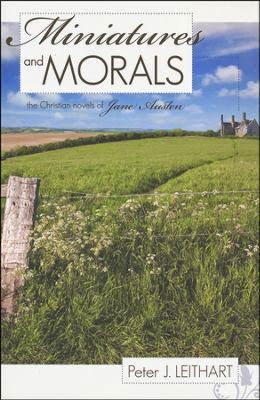
Another book by the same author and done in a similar manner is Miniatures and Morals: The Christian Novels of Jane Austen. Thoughtful questions which present opportunities for writing topics are included and an excerpt of the first chapter, Real Men Read Austen, is here. I found this when my second daughter was about 15 years old & she enjoyed it thoroughly. The boys have surreptitiously watched the BBC Pride and Prejudice and secretly enjoyed it and I said they had to read Northanger Abbey because it was an AO Year 9 free read. They did but that's about the extent of their Jane Austen immersion.
Poetry
Writing a poetic narration using the rhyme scheme of a poem they know
Choosing a ballad poem and changing it to story form
Writing about a subject using alliteration
Writing acrostic poems


Choosing a ballad poem and changing it to story form
Writing about a subject using alliteration
Writing acrostic poems
Composition
When I first started homeschooling my three older children (now 25, 23 & 21 years of age) I hadn't read any of Charlotte Mason's books but used what I'd gleaned from Susan Schaeffer Macaulay's book For The Children's Sake, and what I could source for a reasonable price here in Australia. I found the two books below and they worked well for us. The Creative Writing course can be adapted to make it CM friendly and the second book works well as is and for those with large families it's well priced, uncomplicated & non-consumable. I have the 1992 & 1996 editions respectively although they've been revised since.
Wordsmith - A Creative Writing Course for Young People by Janie B. Cheaney
The author states that creative writing is basically 'expressing oneself' and the book is designed to sharpen language skills and then apply them. It comes with a Teacher's Guide, is written to the student and is designed for about Grade 7 and up. 90 pages.
There are three parts to the course:
Part 1 - concentrates on word usage with a brief overview of grammar, choosing words, pronouns and antecedents. I like how the author connects good grammar with writing and shows its effects.
Part 2 - active and passive voice, sentence structure.
Part 3 - figures of speech, story structure, writing assignments, revision, proofreading.
The teacher's guide has a suggested plan of study which covers 36 weeks and a short section called 'Writing all over the Curriculum' which I like and have gleaned ideas from. I used this for two of the girls who loved writing and they breezed through it. They published a newsletter with another home schooled friend for many years and wrote stories, poems and a variety of other newsworthy material, sending it out to family members scattered across the country and to others who asked for a copy, about 4 or 5 times a year. Although the writing assignments in the book could be substituted with others of your own making to make it more usable in a CM context, it is probably better only to use it with a child who loves writing.


Inspired after listening to Mozart's Sleighride:


Wordsmith Craftsman
This was written as a self-directed programme for Grade 10 and up. The book has suggested schedules for students starting in Year 9, 10, 11 or 12 and also has three parts.
Part 1 - writing every day: note taking, outlining, letters, summaries
Part 2 - paragraphs, writing techniques
Part 3 - the essay: structure, brainstorming, the topic, thesis statement. I think it walks through the essay writing process in a clearer way than some other books I've seen.
A short appendix contains a note taking form, a summary writing form, summaries of the steps used in the four types of essay writing and a list of common fallacies of argument with brief descriptions and examples.
93 pages.

Inspired by Ten Fingers for God: The Life and Work of Dr Paul Brand by Dorothy Clarke Wilson:


.JPG)


