Sunday, June 17, 2012

Music


The composer we've been listening to recently has been Franz Schubert.
A good book for younger children on his life is Franz Schubert and his Merry Friends by Opal Wheeler & Sybil Deucher. 
The Gift of Music by Smith & Carlson has short chapters on great composers and their influence but is more suited to older children.

****************

'I did my work slowly, drop by drop. I tore it out of me by pieces.
Maurice Ravel (French composer 1875-1937)

This video concentrates on the dramatic Romanian conductor, Sergiu Celibidache (1912-1996). The piece is 'Bolero' by Ravel and I think the second part of the quote above could be applied to this man on the video!


 This is a creative variation on Ravel's Bolero - love it!


Monday, June 11, 2012

A Week of Nature Study


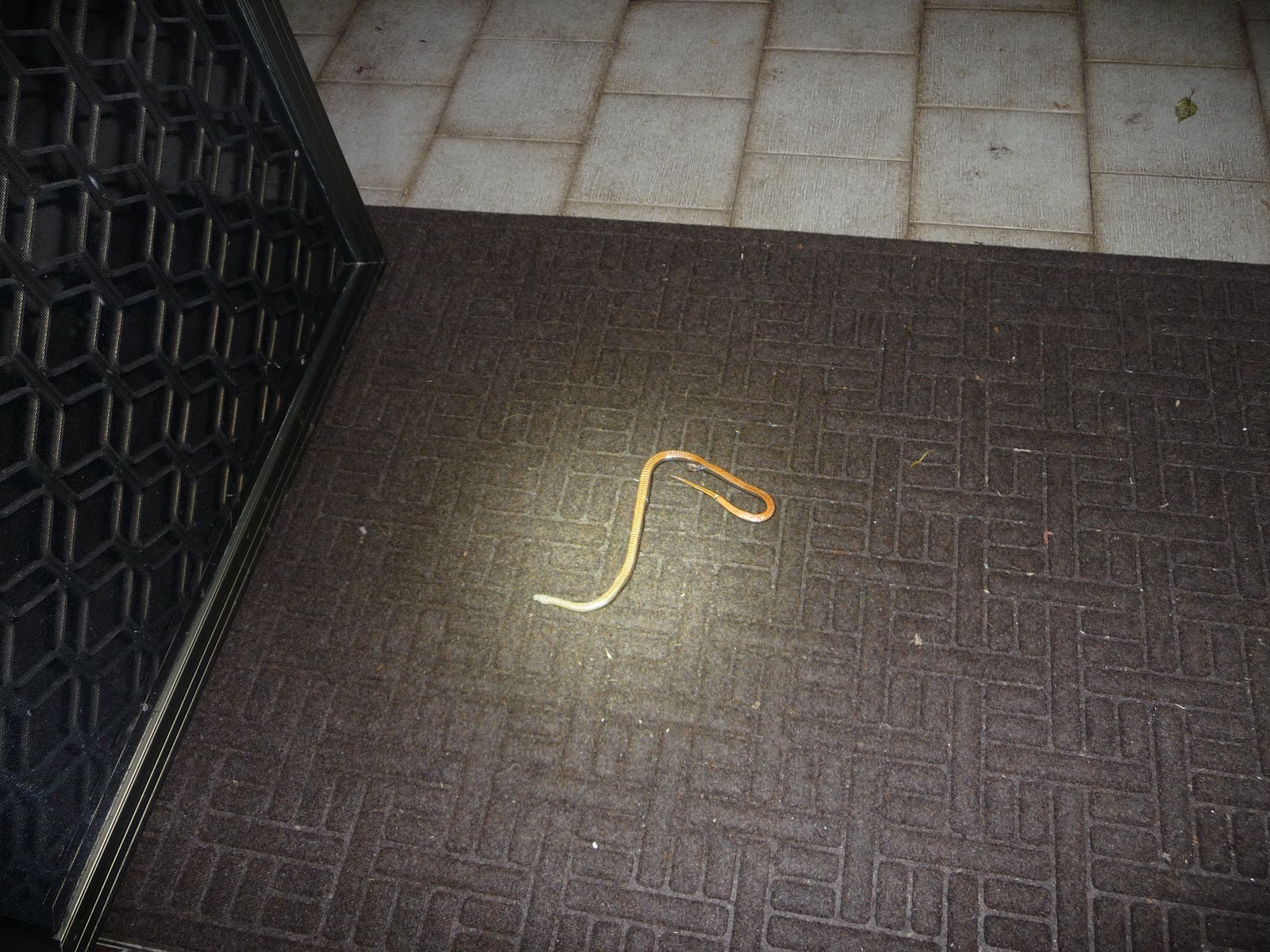
We'd just had a week of pouring rain and the only nature study we'd done for a while was on our cat, watching him jumping at shadows and pulling on the ironed shirts I'd just hung up. Then at the beginning of the next week our daughter rang (from the driveway) and said, "Dad, I think there's a snake at the front door. Could you come and have a look?” It was only a very young (dead) snake. Being the first week of winter we were surprised to see a snake, especially when we'd had such cool weather.


 This beautiful male king parrot (Alisterus scapularis) came and sat in the tree outside our kitchen window. We have a bird bath nearby and lots of small to medium bushes and trees which attract the birds and give them a refuge if they're disturbed. This is one of our favourite birds, so gentle and beautifully coloured. The female was nearby, less showy with mostly green plumage. 

A very useful website for identifying Australian birds: http://www.birdsinbackyards.net/finder
Photographic Field Guide Birds of Australia by Jim Flegg is a book we refer to regularly also.


 We'd kept our chickens cooped up during the deluge so they made the most of their liberty and probably got some good pickings with the rain forcing the earthworms to the surface.


We had a nature walk this week on our suburban block which backs onto a bush reserve. Our chooks started digging up the garden and eating my pot plants so we moved them on and then decided we might as well get some kindling while the sun was out which led to the discovery of some interesting mushrooms……… 


Autumn and early winter is the best time to observe fungi in Australia. 


We had a bit of a hunt to find this Bracket Fungi.


Some good fungi photos  here:  http://www.elfram.com/fungi/fungipics_o.html
And if you really want to get serious try the Australian Fungi Website which is part of the Australian National Botanic Gardens.

And then we had a look at some mosses and lichen.


Did you know?

That lichens are used as pollution monitors.
They are very sensitive to pollution in the atmosphere so they're not often found in cities or industrial areas.
They are called the 'termites of the plant world.'
They were a source of purple dye in Mediaevel times.
They are not separate organisms but are a partnership between an alga and a fungus.
Litmus dye comes from lichen.
Some lichen have antibiotic attributes. 
The grey/white splotches on this sandstone rock are lichens:


 The cat decided to join us.


The obligatory leeches. We've got a dedicated packet of salt kept in readiness for getting rid of these as someone is sure to carry some home if we've had rain.


As I'm writing this the rain has started again and the forecast is for rain all week. We'll go back to looking at the cat's antics (indoors) for awhile I think.

Saturday, June 2, 2012

Homeschooling


We were first introduced to the idea of home education when my husband and I were engaged to be married. It was something we thought about and discussed briefly from time to time but by the time our first child was about 2 years old we began to think seriously about it. By the time she was 4 we had made a definite decision to teach her at home.

She was beginning to read, loved books, had an incredible vocabulary, memory, and attention span, and wanted to learn to play the piano. As her parents we wanted the best for her and we knew we would be 'qualified' to teach her because we loved her and knew her so well.

The idea of sending her into an institutional setting for several hours a day, five days a week, to be taught by someone we didn't really know, someone who also had to care for twenty or thirty other children at the same time, and at the end of the day, no matter how good a teacher, someone who could go home and forget about her, just didn't make sense to us.
 
I'd  had what I would call a mediocre education for most of the time I'd attended school, except for one year in 4th Grade when I had a teacher who had really cared about me. I think she did more for me in one year than all the other teachers I'd had put together. I figured if one teacher in one year had encouraged and motivated me as she had done, how much more I could do with my own children over a number of years!

I regularly get asked if I have a teaching background when people know that I'm teaching my own children. I never finished my own schooling but our three eldest have each gone through to university despite my lack of qualifications. I reckon if you can read and write and you care, you are competent to teach.

 So 19 years of homeschooling later I'm writing this post. I still feel the same way. Our children are all quite different in personality and ability. Our first could read fluently at 4 years of age, four of them were about 5 or 6 years of age, one was 7 years old and one was barely reading at 10 and didn't really read well until his early teens. I've had my convictions tested and tried. I've had to learn to adjust, pray for wisdom along the way and call on the grace of God.


" Education comprehends all that series of instruction and discipline which is intended to enlighten the understanding, correct the temper, and form the manners and habits of youth and fit them forusefulness in their future stations. To give children a good education in manners,arts and science is important; to give them a religious education is indispensable; and an immense responsibility rests on parents and guardians who neglect these duties."

Noah Webster, 1828.


Monday, May 21, 2012

A.A. Milne

I'm reading the poetry of A.A. Milne from a large hardback edition of Winnie the Pooh: The Complete Collection of Stories & Poems ( illustrated by E.H. Shepard) to my youngest. She loves his poems & I love reading them. We have many favourites but Teddy Bear would probably be at the top of her list. You can find a copy here.

Forgiven (Alexander Beetle) was put to music years ago and recorded by Melanie Safka.


The BBC Radio Collection has The House at Pooh Corner & other stories from Winnie the Pooh delightfully  narrated by Alan Bennett. We listened to hours of these on a trip interstate a couple of years ago & even the older kids thought they were funny (well the first time around anyway).

 The Red House Mystery, published in 1922, was A.A. Milne's only mystery novel. It has been published by BJU Press but a free version is here: http://www.gutenberg.org/ebooks/1872. Suitable for around age 12 & up.

Sunday, May 20, 2012

Nature Study


"If the love of Nature be frozen or crushed out, the character can hardly fail to suffer from the loss.
To look is much less easy than to overlook; and to be able to see what we do see is a great gift.
Many of us walk throught the world like ghosts, as if we were in it but not of it. We have 'eyes
and see not, ears and hear not.'" - Sir John Lubbock.


Litoria phyllochroa - otherwise known as Green Stream Frog, Green Leaf Tree Frog or Leaf Green Tree Frog.
Very cute little beastie that came inside clinging to the hydrangea I'd just cut.

For information on Aussie frogs:

http://frogsaustralia.net.au/ 
http://frogs.org.au/frogs/species/Litoria/phyllochroa/


A Visitor for Lunch

Sulphur-crested cockatoo (Cacatua galerita - 'cockatoo with a crest'). Beautiful large & very raucous birds. Very common where we live but we don't often have them land on our verandah, thankfully. They can be very destructive and make an ear-splitting racket. We have bush around us and they tend to stay up in the big old hollowed out gum trees.


"Above all, it is hoped that the habit of open-air study will make life more satisfying to many. We have to forget ourselves in order find ourselves; and an interest in Nature, aroused in youth, will not only save a man from much useless fretting, but will do much to awaken powers that adds to the worth and dignity of life."

"The exercise of the faculty of admiration does more for a child than perhaps anything else. For many centuries the great minds of the race have been telling man that he who has not learned to love has not learned to live. Now, love is based on admiration. It is vain merely to tell a child to love God, or to reverence God, as if by some effort of will this could be done. But let the child learn the joy of sudden wonder and delight at the Creator's work, and then reverence will rise without effort." (William Gillies, "First Studies in Insect Life in Australasia")

Wednesday, May 16, 2012

Folk Songs

Our current (Australian) folk song is "With my Swag all on my Shoulder."
The words & music can be found here http://folkstream.com/100.html

We've been listening to a version on the CD "Bushrangers, Bolters and Other Wild Colonials"  by Warren Fahey which we found at the library (an ABC production). It has a good folky acoustic sound but here's the Seeker's version which I remember hearing years ago:


Sunday, May 6, 2012

Shakespeare

Starting Shakespeare

Our first real  introduction  to Shakespeare's works came when I borrowed a friend's copy of Tales from Shakespeare by Charles & Mary Lamb and gave it to our then 12 year old daughter to read.  I had a volume of The Complete Works of Shakespeare, given to me years before by a friend  who had a spare copy, and it had sat on the shelf for years after I'd decided that I'd never make any sense out of it. Before long the Complete Works were in my daughter's hands being understood & appreciated & to my surprise, enjoyed. I still hadn't read any Shakespeare and it wasn't until a few years ago that I started connecting with his plays at the prodding of my second daughter who has become quite a Shakespeare buff and with her help I began to enjoy Shakespeare's works for myself. He now has become a regular part of our homeschooling.

I've read often enough that Shakespeare was meant to be watched and it did help me to watch some of the movie versions of his plays but my daughter had to give me a running commentary to help me know who was who as I was watching so I've tried  to use a mixed approach when we study Shakespeare. I've  also found it wise to preview all the movies as even the G rated versions have unsuitable scenes but often it's easy enough to skirt around without missing much of the story. 
Here are some of the things we have done.
We read Romeo & Juliet by Margaret Early -this is a re-telling with lovely illustrations.
I had a look at the 1968 movie  by Franco Zeffirelli and chose some scenes to give a feel for the story and the time period & we watched those selections. (I didn't think the film was appropriate in places for general viewing but even looking at a few of the scenes was a great introduction to the play & the boys loved the sword fights.)

Our first introduction to Henry V was with the Laurence Olivier movie, followed by reading the re-telling found in Ian Serraillier's The Enchanted Island (see description below). We then listened to the BBC Arkangel fully dramatized version on CD. (We did this over a couple of months covering about 10 minutes at each listening.) After this we watched the very well done 1990 Kenneth Branagh movie which I edited at a few places (battlefield scenes). It was interesting to compare the two movie versions  of Henry V. The Branagh version was certainly more appealing to my boys but the Olivier film commences and finishes as a play at The Globe Theatre and so gives a good feel for the Elizabethan era which I found helpful.
My youngest loved the Jim Weiss CD versions of A Midsummer Night's Dream and The Taming of the Shrew and after she had listened to them innumerable times we watched the animated version of The Taming of the Shrew here:
www.squidoo.com/shakespeare-animated-tales  (scroll down the page a bit)

Our current Shakespeare play is Much Ado About Nothing. The boys read it in story form in Lambs' Tales and now we are listening to the BBC Arkangel audio plus following along with Cambridge or Oxford guides which have the individual plays with commentary. Reading along with the audio is very helpful even if it's only to know who is speaking when, which can get quite confusing with Shakespeare.

The Enchanted Island by Ian Serraillier is a book of stories from the plays, not of them. He often chooses secondary plot lines to follow which makes for an interesting read that isn't just a repeat of every other book of Shakespeare summaries.  Easy to read with engaging language, the eleven stories include Henry V, King Lear, Macbeth and The Tempest.