Showing posts with label Earth Science. Show all posts

Friday, September 11, 2015

Madame How & Lady Why: Chapter 7 - The Chalk-Carts

Chalk-carts, like mice, and dead leaves, and most other matters in the universe are very curious and odd things in the eyes of wise and reasonable people. 

The White Cliffs of Dover

I couldn't find a definition of 'chalk-carts' anywhere although it's obvious Kingsley was referring to the carts that carried chalk from the area where it was cut. From what I've read (here, for example) it appears the carts were part of a horse-drawn industrial tramway, something that was introduced at the beginning of the nineteenth century. This chapter was fascinating once I understood the gist of what Kingsley was getting, at which wasn't obvious to me until after I'd done some digging around.

Come, let us find out something about the chalk before we talk about the caves. The chalk is here, and the caves are not; and "Learn from the thing that lies nearest you" is as good a rule as "Do the duty which lies nearest you."


Chalk, limestone and marble are all forms of calcium carbonate. Chalk and limestone are formed in marine environments while marble is metamorphosed limestone.
This page explains the difference between limestone & marble.
Marl - a mixture of clay and calcium carbonate.

Many of these (chalk) pits are located near farms and settlements where one principal use of the chalk was for the production of lime which was used to ‘fertilise’ or ‘lighten’ heavier clay soils and also to improve drainage and make it more easy to cultivate.


The South Downs area of England is a series of chalk hills in the Hampshire, East Sussex, West Sussex counties. The chalk landscape acts like a giant sponge, and stores water. A huge underground reservoir provides fresh drinking water for over 1 million people living in the area.

Karst Landscape - Kingsley didn't use this phrase probably because it wasn't in use until the late nineteenth century, but it refers to a limestone region where most or all of the drainage is by underground channels and where erosion has produced fissures, sinkholes, underground streams, and caverns. Some photos and more information here.
I've travelled across the Nullarbor Plain many times but it was only when I was reading though Madame How & Lady Why that I discovered that it is the world's largest limestone karst.


Page 126 - The 'silver Itchen' - one of the most famous chalk streams of Hampshire in England which attracts anglers from all over the world.


Page 126 - invisible chalk  in the water causes it to be 'hard.' A written narration from 10 year old Moozle:

 "Chalk is many different things. Limestone is a harder form of chalk, and marble is chalk heated up. There is lots of chalk in England, the White cliffs of Dover are made of chalk, and lots of other things are made of chalk, not just in England, but in some other countries.  The chalk runs out of caves made by the water in little streams, and thus deposits it in the rivers. If you drink water out of one of these rivers, it’ll taste kind of hard. That’s the chalk in the river that’s making it taste hard." 

Page 130 - Caves

Cave fomations (Speleothems) - some good photos here of Jenolan Caves in NSW.

How Stalactites & Stalagmites form - stalaCtites (form on the Ceiling) and stalaGmites (form on the Ground)

We've done this experiment a few times with varying degrees of success: Make stalactites & stalagmites.

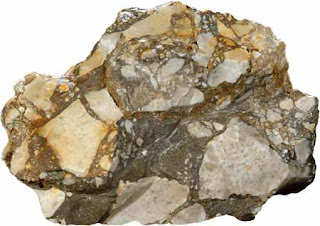


Page 131: Breccia (Italian) - rock consisting of angular fragments cemented together in a matrix.


http://flexiblelearning.auckland.ac.nz/rocks_minerals/rocks/breccia.html


Page 132: Sink hole - a basin in limestone areas down which water disappears. Other names include swallow hole, swallet or doline.

 
 Water Sinks...North Yorkshire, UK


Page 135 - the dropping-well at Knaresborough showing various articles in various stages of petrification. It will take about 3 to 5 months to petrify a teddy bear:


https://commons.wikimedia.org/wiki/File:Mother_Shipton's_cave_Knaresborough_-_geograph.org.uk_-_436482.jpg


Pg 135 - the Proteus or cave salamander. Photos and descriptions here.


Lake Cerknisko (Cercnika, Czirknitz) - the lake that vanishes. Found on a karst landscape in Slovenia


See The Mysterious Lake Cerknica - just beautiful!
And some more photos of the lake.

Page 136 - Mammoth Cave in Kentucky, USA


https://commons.wikimedia.org/wiki/File:Mammoth_Cave_National_Park_001.jpg


Page 137 - Caripe, Venezeula.

'In Humboldt's Footsteps' - The Guacharo Cave
Another name for the Guacharo bird is the oilbird - Kingsley mentions that 'The Indians kill and eat them for their fat.'
Some more information on the birds here
Wonderful gallery of photos of these birds here.




Friday, August 14, 2015

Madame How & Lady Why - Chapter 6: The True Fairy Tale


You like to draw: but why you like it neither you nor any man can tell. It is one of the mysteries of human nature; and that poor savage clothed in skins, dirty it may be, and more ignorant than you (happily) can conceive, when he sat in the cave scratching on ivory the figures of the animals he hunted, was proving thereby that he had the same wonderful and mysterious human nature as you; that he was the kinsman of every painter and sculptor who ever felt it a delight and duty to copy the beautiful works of God.

Madame How & Lady Why


See the Study Guide by Katie Barr at Ambleside Online for helpful commentary on this chapter. Old earth references will be found on some of the sites below.

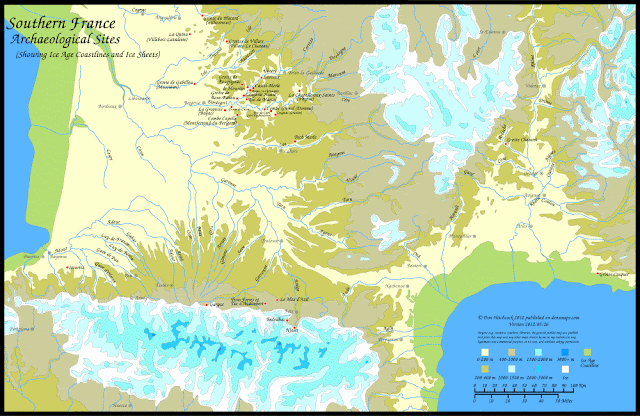
Pg. 106-107: French cave paintings and rock archive - lots of photos.

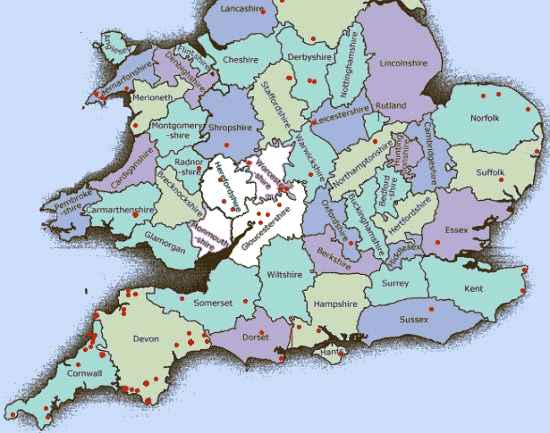
The map below is in a pdf format here and may be printed.

Cave Painting Locations


Pg 107: The Lena River where Woolly Rhino carcasses were found. No commentary, just beautiful scenery:


Historical references to the Woolly Rhino

Scholarly article with some interesting information on the Woolly Rhino find in Siberia if you'd like to delve into this a bit more.


Pg. 109: The Irish elk - not actually Irish nor elk but a gigantic deer, Megaloceros giganteus. See here and here.

Pg 108 - The Ice Age


Pg 114: Middens - what they are & what they tell us.


Middens provide an insight into earlier occupation of sites. This one, at the NW edge of Traigh na Beirigh, Great Britain, indicates shellfish in the diet.


Pg 116 - Kingsley talks about 'Neanderthal man' in a very derogatary fashion - that he was 'like an ape' & 'would have eaten you if he could.' This article shows how the view of Neanderthal man has changed in recent times.

Over the past several years, the scientific community has witnessed (not always to its liking, I might add) a serious “redefining” of the Neanderthal people. Some anthropologists of the past depicted them as culturally stagnant, if not outright stupid, individuals. In 1996, however, researchers were forced to reevaluate their long-held views on Neanderthals...


I found this video of the Lacaux caves which were discovered in France in 1940, well after Kingsley's time - but it's in French! However, it doesn't look too difficult & I'm going to go through it with Moozle and see how she goes translating it, or the gist of it at least.


Update: Chauvet Cave, France - in English! Thanks to Zoe for the suggestion.


Saturday, July 4, 2015

Madame How & Lady Why: Chapter 5 - The Ice-Plough

I must tell you that there are sometimes—not often, but sometimes—pages in Madam How's book in which one single letter tells you as much as a whole chapter; in which if you find one little fact, and know what it really means, it makes you certain that a thousand other great facts have happened... You feel like Robinson Crusoe when, walking along the shore of his desert island, he saw for the first time the print of a man's foot in the sand. How it could have got there without a miracle he could not dream. But there it was. One footprint was as good as the footprints of a whole army would have been. A man had been there; and more men might come. And in fear of the savages...he went home trembling and loaded his muskets, and barricaded his cave, and passed sleepless nights watching for the savages who might come, and who came after all. 
 
And so there are certain footprints in geology which there is no mistaking; and the prints of the ice-plough are among them. 

Charles Kingsley 


The photo above is of the glaciated Nant Ffrancon valley in North Snowdonia, Wales.
I used some of the resources below just for my own interest & education in this area. The videos would be enjoyed by most children even though they may not understand some of the content. Glaciers, Madame How's ice-ploughs really are a fascinating study.
I've put some other resources on my Ambleside Online Pinterest board.
Also see Ambleside Online's study guide by Katie Barr for this book.

What is a glacier?

A mass of ice which moves down a valley from above the Snowline towards the sea under the force of gravity.


How do glaciers affect land?

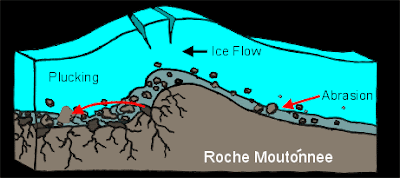
According to my Penguin Dictionary of Geography, more lakes are due to glacial erosion than any other cause. Glaciation is the covering of an area, or the action on an area, by an ice-sheet or glaciers. The video below is a clear and thorough explanation of glacial erosion - 'plucking,' cirques, glacial horns, the formation of roche moutonnées and other landforms - about 7 minutes in length.


Nant Ffrancon is a deeply glaciated and visually dramatic valley in north Snowdonia
- See more at: http://www.visitsnowdonia.info/nant_ffrancon-211.aspx#sthash.9Dd0Nx78.dpuf
Nant Ffrancon is a deeply glaciated and visually dramatic valley in north Snowdonia
- See more at: http://www.visitsnowdonia.info/nant_ffrancon-211.aspx#sthash.9Dd0Nx78.dpuf
Nant Ffrancon is a deeply glaciated and visually dramatic valley in north Snowdonia
- See more at: http://www.visitsnowdonia.info/nant_ffrancon-211.aspx#sthash.9Dd0Nx78.dpuf


Glaciers with chocolate: Did you know that glaciers hold nearly 2% of Earth's water?


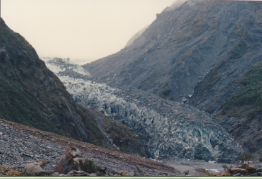
Not the greatest picture - I took this photo of my husband standing in front of the Fox Glacier in the South Island of New Zealand on our honeymoon. It was a very eerie, surreal atmosphere & an awe-inspiring sight.


This one below is the Tasman Glacier at Mount Cook. We took our four eldest children aged 2 to 8 years at the time up the Ball Hut Road when we spent some time living in New Zealand and looked down on this from a different angle. Spectacular, but I was glad to get off the side of Mount Cook. I was waiting for an avalanche to take us all out.


What is an iceberg? 

A mass of land ice which has broken off or "calved" from the end of a glacier or from an ice shelf, and is afloat in the sea.

Pg 88:
Snowdonia - good photos of glacial activity and its effect on the land. Old earth perspective. Some fantastic photos of the area here and here


Pg 89 - the power of ice & snow. Some news photos of effects of a winter storm in New England, January, 2015. 

Pg 91 - Kingsley mentions the Esquimaux (Eskimo) in relation to living in a permanent winter environment. There are many videos related to life in the Arctic but here are two from 1959 and 1950 that I have actually watched & thought were quite good:


What is a Moraine?

Material, mostly rock and soil, left behind by a moving glacier.
Pg 92 & 93

 Mueller Glacier, NZ with moraine in the foreground (Wikiwand)


Pg 94 to 96 - An academic article on glacial geology which I thought tied in well with Kingsley's observations.

'Many of the surficial geologic deposits which are the foundation for the fertile farmland soils and deposits we extract from sand and gravel pits were laid down during glaciation.

Pg 99 - rochers moutonnes: the glacial erosion video above explains these plus other terms very well.


http://www.uoguelph.ca/~sadura/glref/gl42.html


Page 100 - Serpentine rock

Pg 100
Glen Muick

'Spittal' is an old Scots word meaning 'a refuge on a remote hill pass' and is said to come from a time when there were wolves on the hills. Loch Muick lies a short distance away. Lochnagar is on the skyline to the right.

 © Copyright Nigel Corby and licensed for reuse under this Creative Commons Licence

I mentioned this in a previous post on MHLW but it relates to this chapter so here it is again - a PDF for children on glacial erosion and the shaping of the Matterhorn in the Swiss Alps. One mention of millions of years.

Posts for previous chapters of Madame How & Lady Why:

I. The Glen
II. Earthquakes
III. Volcanoes
IV. The Transformations of a Grain of Soil
V. The Ice Plough


Monday, May 25, 2015

Madame How & Lady Why: Chapter 4 - The Transformation of a Grain of Soil

'Why, you ask, are there such terrible things as volcanos? Of what use can they be?'


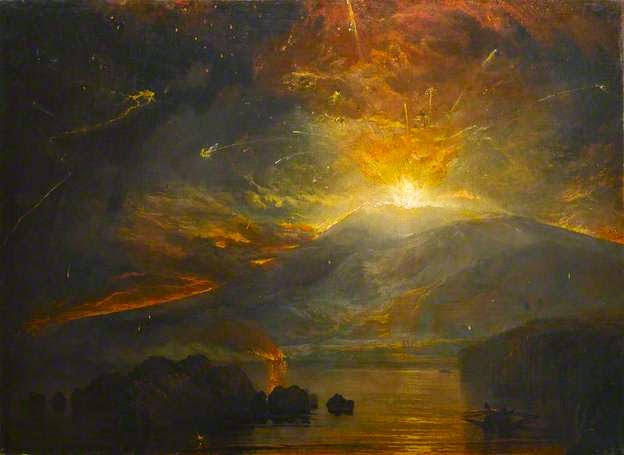
The Eruption of the Souffrier Mountains, in the Island of St Vincent, at Midnight, on the 30th of April, 1812, from a Sketch Taken at the Time by Hugh P. Keane, Esqre by Joseph Mallord William Turner

the-eruption-of-the-soufriere-mountains-in-the-island-of-s67007


Pg 71 - The flow of a lava stream. This BBC site has some spectacular photos of lava flows.

Pg 72-73 - Trees ( I've put some pictures of these plus additional pictures & videos of other subjects on my Ambleside Online board at Pinterest).

Pg 73-74 - Kingsley tells about the threat by the eruption of Mt Etna on the town of Catania in Sicily. The story of Catania is also told by Fabre in The Story Book of Science. Fabre has a kinder attitude to the inhabitants of the town in his rendering of the story.

 Pg 74 - Lava entering the sea Hawaii (or Sandwich Islands as they used to be known).


I posted a video on the Mt St Helen's eruption which showed the damage done by the volcano to the fish population in Spirit Lake: MHLW: Part 3 - Volcanoes.
There are some spectacular photos of lava from a vent in Hawaii's Kilauea volcano as it reaches the sea on this National Geographic website. 


And now you will ask me, with more astonishment than ever, what possible use can there be in these destroying streams of fire? And certainly, if you had ever seen a lava stream even when cool, and looked down, as I have done, at the great river of rough black blocks streaming away far and wide over the land, you would think it the most hideous and the most useless thing you ever saw. And yet, my dear child, there is One who told men to judge not according to the appearance, but to judge righteous judgment. He said that about matters spiritual and human: but it is quite as true about matters natural, which also are His work, and all obey His will.


Pg 75 - The richness of volcanic soils. This short article answers the question of 'Why do people live on volcanoes?' 'Volcanic ash can be considered as a time-release capsule, rich in nutrients.'

Of course, when the lava first cools on the surface of the ground it is hard enough, and therefore barren enough. But Madam How sets to work upon it at once, with that delicate little water-spade of hers, which we call rain, and with that alone, century after century, and age after age, she digs the lava stream down, atom by atom, and silts it over the country round in rich manure. So that if Madam How has been a rough and hasty workwoman in pumping her treasures up out of her mine with her great steam-pumps, she shows herself delicate and tender and kindly enough in giving them away afterwards. 


Pg 78 - The 1812 eruption of St Vincent in the West Indies was witnessed by plantation owner and barrister, Hugh Perry Keane. He recorded his observations in a diary and also made a sketch which was what Turner based his painting above upon.

The Commonwealth


Pg 80 - Madame How's remaking of the land. The book below would be interesting for a child who's not an independent reader. It's recommended for Grades 2 to 4 and is based on the eruption of the Paricutin volcano (the volcano in a cornfield) in Mexico in 1943. I borrowed this book from the library years ago and it was a hit with the boys.


 Pg 77 - Kingsley mentions atoms in a few places and I found this video which gives a simple and clear explanation on atoms, molecules and bonding.


What's all the matter? Atoms and Molecules: Atoms, elements and molecules. Understanding the building blocks of matter.


 Pg 84  - there's a brief mention of millions of years

The Gallery of Natural Phenomena has some topics of general interest relating to what is covered in MHLW.

Paricutin

I forgot to add this video on the rock cycle:


For Resources for Chapter 5 of MHLW, The Ice-Plough see here.

Tuesday, April 14, 2015

Madame How & Lady Why - Part 3: Volcanoes

'And wherever there are volcanos there will be earthquakes. You may have earthquakes without volcanos, now and then; but volcanos without earthquakes, seldom or never.
How does that come to pass? Does a volcano make earthquakes? No; we may rather say that earthquakes are trying to make volcanos. For volcanos are the holes which the steam underground has burst open that it may escape into the air above. They are the chimneys of the great blast-furnaces underground, in which Madam How pounds and melts up the old rocks, to make them into new ones, and spread them out over the land above.'

Madame How & Lady Why by Charles Kingsley


An 1888 Lithograph of the 1883 Eruption of Krakatoa.
Lithograph of 1883 Krakatoa Eruption


'Cone, crater, lava: those words make up the alphabet of volcano learning. The cone is the outside of a huge chimney; the crater is the mouth of it. The lava is the ore which is being melted in the furnace below, that it may flow out over the surface of the old land, and make new land instead.'


Ambleside Online has a guide by Katie Barr which provides background information on the book and the following are some of the rabbit trails we pursued as we went through Chapter 3 of MHLW which was all about volcanoes. You'll find some information repeated in the different videos and websites but it's a fascinating subject and we thought they were all helpful.

Pg. 49 - Kilauea Volcano in Hawaii (Kingsley refers to Hawaii as the Sandwich Islands, the name given to them by Captain James Cook in 1778).


Volcano 101 - very good; explains the different types of volcanoes; one view of a 'mummy' from the ruins of Pompeii:


What is the common link between earthquakes, volcanoes, and tidal waves? An ABC Splash video with transcript.


Below - good, simple video on how volcanoes are formed and continental drift. One mention of millions of years towards the end.


Geography - Seterra, a free programme that can be used online or downloaded (which is how we use it) has a world mountains and volcanoes map game.

Pg 54 - Mt. Vesuvius

Pliny the Younger, witness to a catastrophe. Great site with two videos of Pliny's observations of the Vesuvius eruption in 79AD.

The destruction of Pompeii - some information at 'Eyewitness to History.'


Short video on Mt Vesuvius facts and narration of Pliny the Younger:


Mt Vesuvius erupts near Naples, Italy in 1944:


Excellent website on the Mt Vesuvius eruption during World War II. Probably of more interest to an older child but I think most boys would love it.

A 2009 aerial view of a very different Mt Vesuvius:


The active volcano island of Krakatoa lies between the islands of Java and Sumatra in the Sundra Strait, and is one of the most dangerous volcanoes in the world.


New Zealand Volcanoes

We were living in New Zealand between the 1995 and 1997 eruptions of Mt Ruapehu. I thought it was bizarre to be playing in the snow on a mountain which had erupted in recent times but my husband, being a New Zealander, took it in his stride. He thinks Aussies are crazy to ski on snow fields that have trees sticking up out of them.
One of his cousins is a volcanologist and it made me feel slightly better that he thought the mountain was safe enough the day we went up. Only slightly. I was making escape plans in my head all the time I was up there.
An article from The Earthquake Commision - Remembering the 1995 Mt Ruapehu Eruption.

The Institute of Geological and Nuclear Science (GNS) has lesson plans and information on the volcanoes of New Zealand and a fact sheet on Ruapehu which is the largest active volcano in NZ.

The Waimangu Volcanic Valley is a geothermal system at Rotorua in the North Island of New Zealand which we visited on our honeymoon. An eerie and beautiful place.

Crater Lakes, Pg 63

 Inferno Crater Lake, New Zealand
Inferno Crater Lake, New Zealand


Mt. St. Helen's Eruption May 18, 1980


A sweep of Cotopaxi (see Pg 60 of MHLW) at 5897 meters. Located in Equador in South America


New island formed by volcanic eruption, Japan 2013: